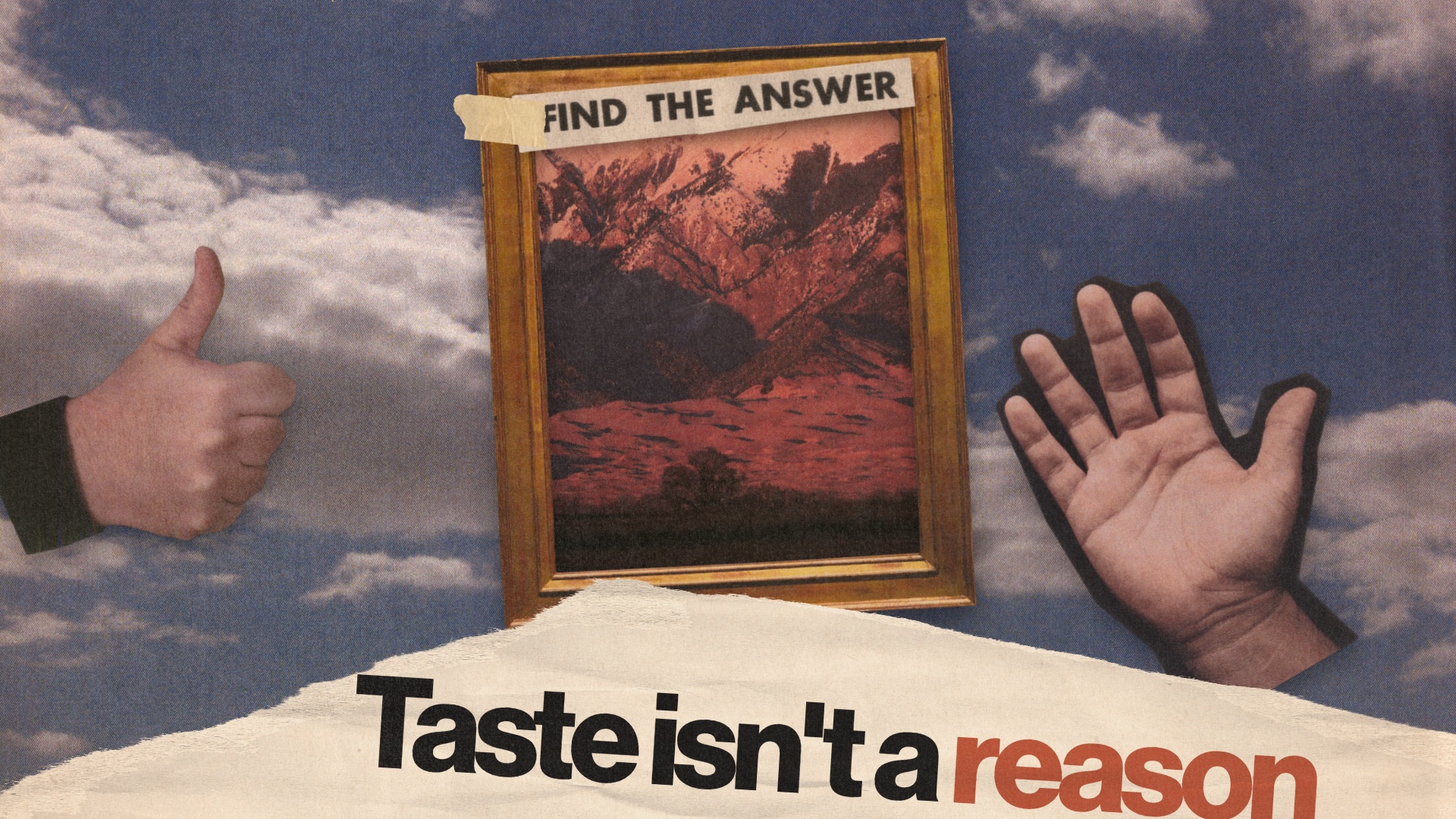
If it has no purpose, you paid for art
Bryan Ruiz Jiménez hit a wall two years into teaching himself design, and the problem wasn't skill. If nobody says what a piece is for, it's art, and that's what you end up paying for.
Bryan Ruiz Jiménez taught himself design. He didn't have a degree or anyone to show him the way, so he kept stopping by a design studio near his house until they let him push papers around. Eventually they taught him the basics on an old Mac, and he picked it up fast.
About two years in, he hit a wall. He could feel it, but he couldn't name it. Part of him thought it was a skill problem, and part of him suspected something else was going on. Then he figured it out. "The problem was there was no strategy."
Pretty making
What Bryan had learned was what a lot of self-taught designers learn. You learn the tools, and you learn to apply them for different kinds of businesses. "But really you're just making things pretty," he said when he came on my podcast. Design means putting something together to do a specific job. "There was no purpose besides making things look pretty."
His clients didn't help, because they were asking for the same thing. "I just gave you the art file," they'd say, or, "Do you have the artwork?" When the client calls it art and the designer treats it like art, nobody in the room is asking what it's for. Art also comes with its own defense: it's my art, so don't tell me to change it.
Bryan put the difference simply. Art can serve the function of design, and design can be made to work as art, "but they're not interchangeable."
I asked him the wrong question
I asked Bryan whether the point of strategy, for the people who built it, was to fight the commoditization of design. Tools got cheap, designers from everywhere flooded the market, and prices went down. Strategy seemed like the way to stay worth more.
He didn't take it. "I think some would say that. I wouldn't say that." Holding off cheap design was a side benefit for him. The reason he went looking was simpler. "My design is plateaued. I don't know why. I feel like I can't help my customers enough." Strategy was what finally let him have a business conversation with them.
I'd been looking at it from the designer's side, as a way to protect the work and the price. Bryan was looking at it from the client's. Kerning, spacing and pixels are fine, he said, "but if it doesn't serve the ultimate business goals, then none of that matters."
How owners end up paying for art
Sometimes you asked for art. You wanted a logo, a flyer or "the artwork," and nobody ever wrote down what it had to do.
Sometimes the designer is good with the tools and has never been asked the question either. Bryan was that designer for two years, and he had real talent.
And sometimes the purpose was there at the start and got lost in the rounds. Bryan knows the feedback by heart: "I just don't feel it. It doesn't pop. Let me see another version." Nobody's checking the work against a goal anymore. They're checking it against a feeling.
Before anything gets made, say what job it has to do. If your designer doesn't ask, ask them. That question is where my strategy work starts, and it's the difference between paying for something pretty and paying for something that works.